

01 · Regenerative first
Regenerative medicine
Regenerative injections such as PRP can be part of a plan once your exam supports them. Joint injections here are guided by ultrasound.
About regenerative medicine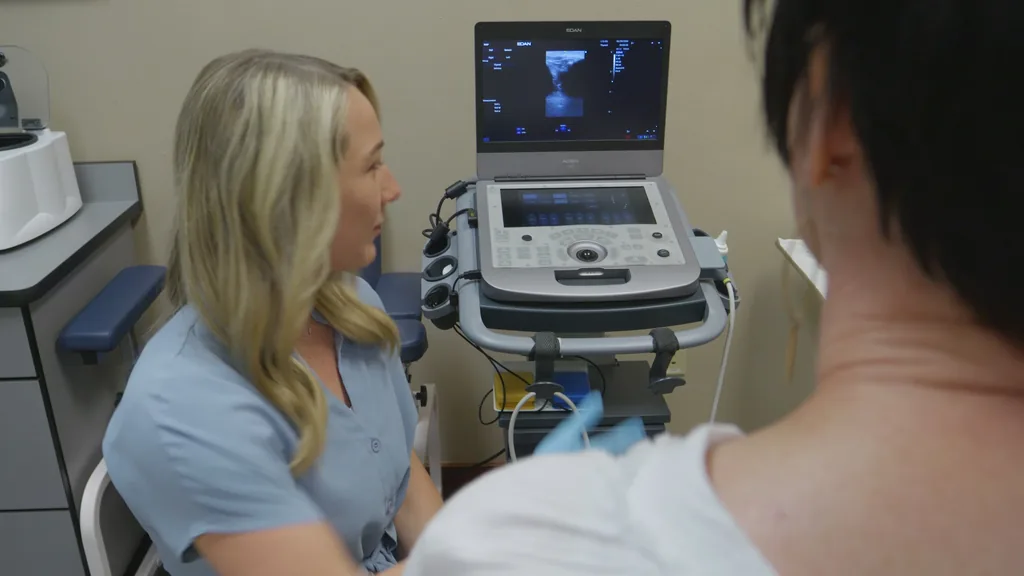
When your shoulder starts saying no to the reach.
An ache after a round, pain when you lift a bag, a night you cannot get comfortable.
Ultrasound in the treatment room
The short answer
Shoulder pain often comes from an irritated or torn rotator cuff, bursitis, arthritis or a stiff, frozen shoulder, and sometimes from a pinched nerve in the neck. Our Redmond team starts with an exam to find which one is driving yours. Care may combine regenerative medicine, focused shockwave and guided rehab.
Reaching overhead, putting on a jacket or sleeping on your side can start to hurt. For some people it is a deep ache after using the arm, and for others a sharp pain or weakness when lifting.
We check how the shoulder moves, where it is weak and how your neck and upper back play in. From there, your plan can include regenerative care for the shoulder and guided rehab.
What is going on
Your shoulder has the widest range of motion of any joint, and it is really four joints side by side. The rotator cuff, a group of muscles and tendons, keeps the ball of the upper arm bone in its socket. When one part is irritated, lifting and reaching start to hurt.
Overhead work, a fall or years of repeated use stress the rotator cuff and the sac that helps it glide.
Pain leads to less movement, and the joint can stiffen and lose range.
Lifting, reaching behind your back or sleeping on that side keeps setting the pain off.
Shoulder pain is common and usually not dangerous, though a few causes are, so it is worth knowing the warning signs.
Guided rehab records your range of motion and strength at the start, so each step of progress is measured against it.
Is this what you feel?
Shoulder pain can feel sharp or dull, and it can travel.
Your list
of 8
Bring your list to the evaluation; it helps us start in the right place.
Book an evaluation
Where it hurts: the shoulder
Why it happens
The rotator cuff tendons can wear down with age and use, or tear in a fall. Bone spurs that rub the tendon, called impingement, can lead to a partial or complete tear over time.
A bursa is a small fluid-filled sac that helps tissues glide. When it is inflamed, lifting the arm and sleeping on that side can feel pinchy and sore.
Frozen shoulder develops gradually as the joint capsule stiffens. Range of motion shrinks, so putting on a jacket or reaching into the back seat gets harder.
Osteoarthritis wears the joint cartilage, which can bring stiffness, lost range of motion and grinding or clicking. At first it may hurt only with activity, then at other times too.
A pinched nerve in the neck, called cervical radiculopathy, can send pain into the shoulder. That is why a shoulder exam includes the neck.
How we treat it
Shoulder pain treatment here is chosen from your exam: which tissue is irritated, where the shoulder is weak and how your neck and upper back move. Every option is non-surgical, and the team in our one clinic shares your plan.
01 · Regenerative first
Regenerative injections such as PRP can be part of a plan once your exam supports them. Joint injections here are guided by ultrasound.
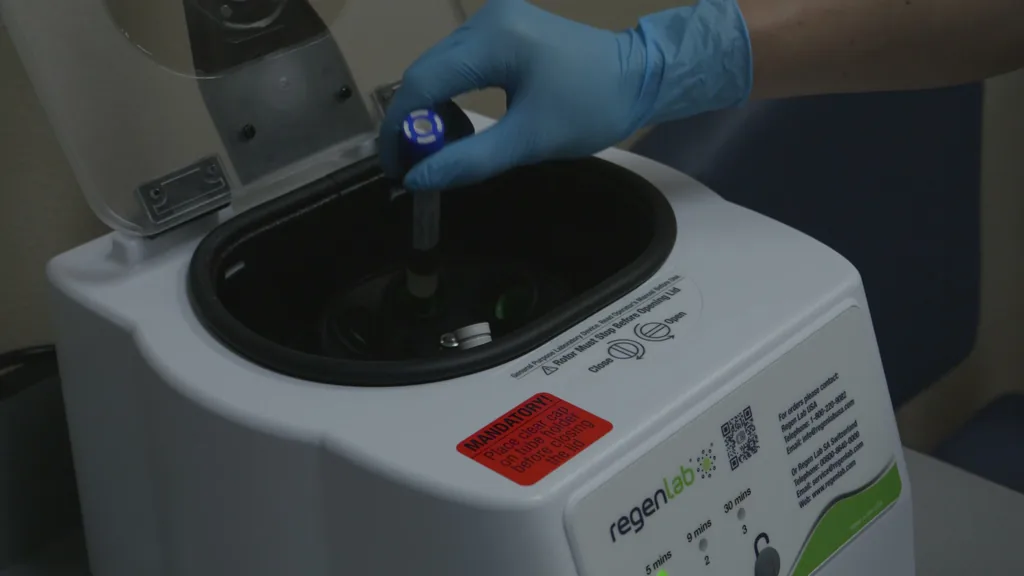
About regenerative medicineOne blood draw, spun in our own centrifuge to separate the platelet-rich plasma, which is then injected where your plan needs it.
A handheld applicator sends acoustic pulses into the tissue, and the intensity is adjusted during the session.
Range of motion first, then rotator cuff and shoulder blade strength, coached by our medical assistants, with exercises for home.
Regenerative therapies are not a cure and results vary. Some biologic products discussed here are not FDA approved for this use. Your provider will review options, risks and costs with you.
What to expect
Shoulders need time to heal.
Your history and an exam, with imaging when it is needed.
Rest the arm, use ice to ease pain and swelling, and avoid the movements that set it off.
Guided rehab restores range of motion first, then strength, with exercises to do at home.
For a partial rotator cuff tear, improvement with non-surgical care can take up to a year.
Your timeline depends on the cause, how long the shoulder has hurt and how much strength it has lost.
Can it wait?
Do not wait
Go to urgent care or an emergency room, or call 911.
While it settles
Shoulder pain with chest pain or trouble breathing needs 911 right away, and the other signs need medical care today. Pain that lasts more than a few days, or gets worse, is worth an exam.
Cost and payment
Prices are not posted online.
Your cost follows your plan: the number of rehab visits, any shockwave sessions and whether an injection is part of it.
In patients' own words
...I’m down to maintenance visits. Neck, back, shoulders and hands are all MUCH better. I’m 72. Been active my whole life....
I've had bad back, neck, and shoulder issues most of my life, but the pain always went away for long periods of time, so I never thought twice about it until a few weeks ago when the pain didn't go away like it usually did....
Individual results vary.
See all reviews on Google
Who you will see
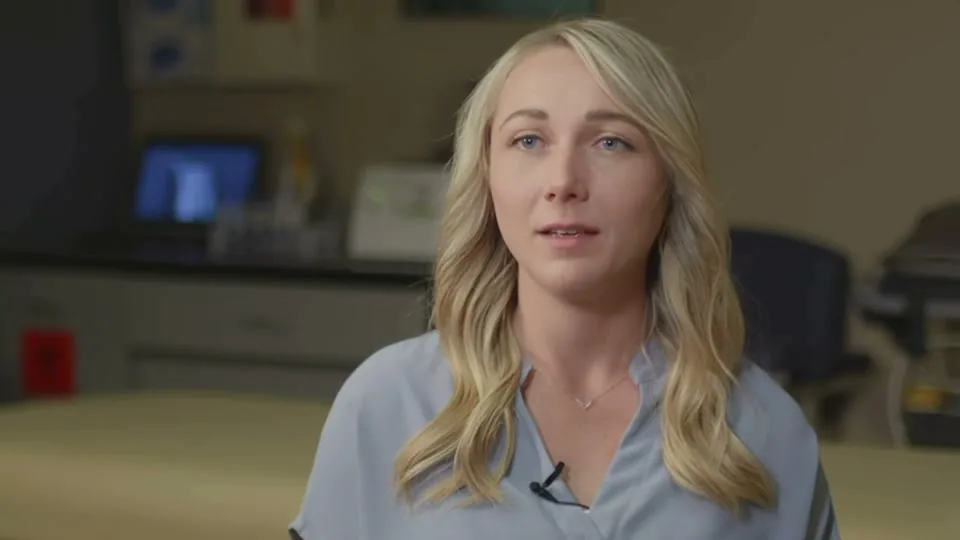
Your shoulder plan brings together the Doctor of Chiropractic who founded the clinic and works with professional and amateur athletes, and our nurse practitioner, who gives regenerative injections here.
Our medical assistants coach your rehab.
Dr. Kent Rookstool, DC, Doctor of Chiropractic and founder · Summerlyn Ellis, FNP-C, Family Nurse Practitioner
Book a visit with our teamBy the numbers
3
Licensed providers on the team
Getting here
Bend's Pine Nursery Park has a 16-court pickleball complex, and downtown Bend is about 24 minutes (16.6 miles) from the clinic on Highway 97.
1020 SW Indian Ave Ste 100, Redmond, OR 97756 · (541) 923-6024
Mon to Thu 9 AM to 6 PM
Your first visit
Share a brief note about where it hurts, what sets it off and how long it has been going on. We will evaluate your symptoms, discuss your goals, and explain which options may fit.
Call (541) 923-6024. Mornings or afternoons, Monday to Thursday.
We look at how your pain behaves, what movements trigger it, and what tissues may be involved.
We walk you through what we find in plain language and outline next steps that match your goals.
Do not keep working through it. Using a painful shoulder hard can make it hurt more, and in severe cases it can cause lasting damage. Hold off on heavy lifting and on sleeping on the sore side until it has been checked.
Pain and weakness when you raise, lower or rotate the arm. Shoulder pain that gets worse at night or when the arm is resting. Popping, clicking or crackling with certain movements. Many people with a tear also find it hard to lift everyday items.
Ice is the usual first choice for a new injury or swelling, because it eases pain and swelling. For stiffness from arthritis, ice and moist heat can both help, so use whichever feels better. Wrap ice in a thin towel and keep it off bare skin.
It can be hard to tell on your own. Joint problems such as arthritis tend to bring stiffness, lost range of motion and grinding. Tendon and muscle problems tend to hurt with certain movements, such as lifting or reaching overhead, and can come with weakness.
Not always. Some people have a rotator cuff tear with no symptoms at all, and surgery may be recommended for a complete tear or when other treatment has not helped. Your provider reviews your findings with you, including when a surgical opinion is the right next step.
Not always. An exam of tenderness, range of motion and arm strength comes first. An X-ray can show arthritis or bone spurs, while an MRI or ultrasound shows a torn tendon in the rotator cuff.
From our team
Pain control clinic
What pain guarding is, how it keeps a sore shoulder stiff and limits how you reach and sleep, the signs to get it checked, and where shoulder treatment begins.
Advanced Pain Solutions
Bring the movements that hurt to your first visit.
Mon to Thu 9 AM to 6 PM · 1020 SW Indian Ave Ste 100, Redmond