

01 · Regenerative first
Regenerative medicine
When your exam supports it, regenerative injections such as PRP may be part of the plan, given here in the clinic.
About regenerative medicine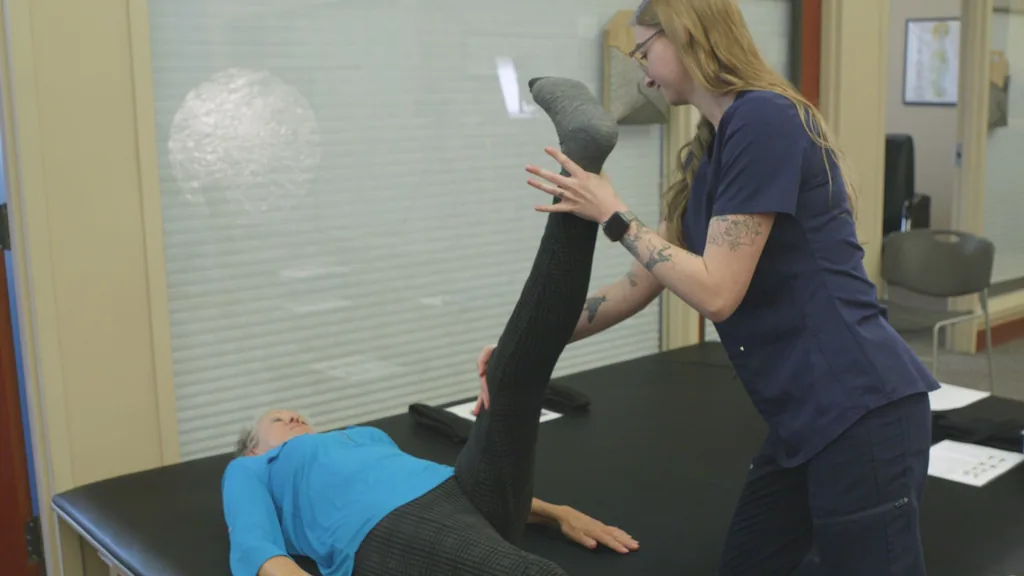
Hip pain on the course and on the stairs.
Stiffness after sitting, a sore groin on the stairs, an ache that cuts a round short. We check the joint and the tissue around it, then plan your care.
The short answer
Hip pain can start inside the joint, as with osteoarthritis or a labral tear, or in the tissue around it: an irritated bursa, a strained muscle or a tight iliotibial band. An exam at our Redmond clinic sorts out which. A plan can combine chiropractic adjustments, focused shockwave, guided rehab and regenerative therapies such as PRP.
Hip trouble often shows up in ordinary moments: getting out of the car, climbing stairs, the first steps after sitting, the walk between shots on the course. You may start to shorten your stride or favor one side.
Your exam looks for the structure that is irritated: the joint itself, or the tendons, muscles and bursa around it. When the joint or a tendon is the source, regenerative medicine for hip pain may be part of the plan, with rehab beside it.
What is going on
Hip pain is pain in or around the hip joint. It can start in the bone and cartilage of the joint or in the bursa, tendons and muscles that surround it. You may feel pain from the hip in your groin, the front of your thigh or even your knee.
Walking, golf, stairs and long hours of sitting all load the hip.
Cartilage wears down, a bursa swells or a tendon is strained.
You move differently to protect the sore side, and stiffness can follow.
Digital X-rays may be part of your exam, and your provider goes over them with you.
Guided rehab records a baseline at the start, so your provider can measure change as your plan goes on.
Is this what you feel?
Note the ones that match yours and bring the list to your visit.
Your list
of 8
Bring your list to the evaluation; it helps us start in the right place.
Book an evaluation
Where it hurts: the hips
Why it happens
Hip pain can come from inside the joint or from the tissue that surrounds it.
Cartilage and other tissue inside the joint break down gradually over time. In the hip, arthritis is often felt in the groin or the front of the thigh, with stiffness after rest that eases as you move.
A bursa is a small cushion of fluid near the joint. When one is irritated, getting up from a chair, walking, climbing stairs and driving can all hurt on the outside of the hip.
The hip flexors, hamstrings and groin muscles all cross the hip. A strain from a quick start, a long hike or a hard swing can leave the area sore and tight.
The labrum is a ring of cartilage around the hip socket. A tear, or extra bone growth around the joint called impingement, can cause pain with movement and exercise.
The iliotibial band runs down the outside of the thigh. When it is tight or irritated, the outer hip can ache, and some people feel or hear a snap at the hip as they move.
How we treat it
A hip plan follows your exam and can combine more than one treatment: regenerative care such as PRP, focused shockwave, chiropractic adjustments and guided rehab. Coached exercise builds strength in the muscles that support the hip.
01 · Regenerative first
When your exam supports it, regenerative injections such as PRP may be part of the plan, given here in the clinic.
About regenerative medicinePRP comes from one draw of your own blood, spun in our centrifuge to separate the platelet-rich plasma.
A handheld applicator sends acoustic pulses into irritated tissue around the hip from outside the body.
Adjustments for stiff joints in the low back and pelvis, planned with the rest of your hip care.
Coached hip and core exercises in the clinic, plus a home program you keep doing between visits.
Regenerative therapies are not a cure and results vary. Some biologic products discussed here are not FDA approved for this use. Your provider will review options, risks and costs with you.
What to expect
Every hip responds differently, and the cause sets the pace.
We take the story of your hip, examine it and take X-rays when your exam calls for them.
Calm the irritated tissue and keep you moving gently, with the treatments your plan includes.
Coached exercises in the clinic and at home strengthen the muscles around your hip.
The home exercises continue after your clinic visits end.
How long recovery takes depends on the cause, your general health and how regularly you do the home exercises.
Can it wait?
Do not wait
Go to urgent care or an emergency room, or call 911.
While it settles
Go to an emergency room for any of these. For a hip that is sore but still working, see a provider if it hurts after a week of home care.
Cost and payment
Prices are not posted online.
The cost of a hip plan depends on which treatments it combines and how many visits it takes.
In patients' own words
I came in with hip stuck. I couldn't bend over and hardly walk....
Individual results vary.
See all reviews on Google

Who you will see
Your hip plan is led by our founder, a Doctor of Chiropractic, with regenerative injections given by our nurse practitioner. Joint injections are guided by ultrasound. Our medical assistants coach your rehab exercises.
Dr. Kent Rookstool, DC, Doctor of Chiropractic and founder · Summerlyn Ellis, FNP-C, Family Nurse Practitioner
Book a visit with our teamGetting here
Eagle Crest Resort is about 13 minutes (6 miles) from the clinic, and Brasada Ranch about 22 minutes.
1020 SW Indian Ave Ste 100, Redmond, OR 97756 · (541) 923-6024
Mon to Thu 9 AM to 6 PM
Your first visit
Share a brief note about where it hurts, what sets it off and how long it has been going on. We will evaluate your symptoms, discuss your goals, and explain which options may fit.
Call (541) 923-6024. Mornings or afternoons, Monday to Thursday.
We look at how your pain behaves, what movements trigger it, and what tissues may be involved.
We walk you through what we find in plain language and outline next steps that match your goals.
Pain from inside the hip joint is often felt in the groin or the front of the thigh, and hip arthritis commonly shows up there. Pain on the outside of the hip more often points to tissue around the joint, such as a bursa or the iliotibial band. Your exam tells the two apart.
Low-impact activity such as walking, cycling and swimming is part of the exercise advice for osteoarthritis from the National Institutes of Health. Start slowly and build up. If walking brings on a sharp pain, or you start to limp, have the hip checked before you push on.
Both can help. Heat increases blood flow and flexibility, which suits a stiff hip. Cold numbs the area and may ease inflammation, which suits a hip that is sore after activity. Keep a cloth between the pack and your skin.
Stiffness after rest is a common sign of osteoarthritis, and it usually lasts less than 30 minutes once you start moving. A tight hip flexor from long hours in a chair or the car can add to it. Standing up and moving every so often helps.
That depends on what your exam finds, and your provider can suggest changes for the course. Warm up before you play, stretch your quadriceps and hamstrings, and cool down afterward. Stop and have the hip checked if the pain turns sharp or you start to limp.
It can. Extra weight adds load to the hip with every step, and losing weight can help reduce pain and make the joint easier to move, especially with arthritis. Standing for long periods can also aggravate a sore hip, so break it up when you can.
Advanced Pain Solutions
Leave your first visit with clear next steps for your hip.
Mon to Thu 9 AM to 6 PM · 1020 SW Indian Ave Ste 100, Redmond