

01 · Chiropractic first
Chiropractic adjustments
Adjustments for stiff joints in the neck and upper back, planned around your posture and headache pattern.
About chiropractic adjustmentsA clear look at what sets your headaches off.
A tight band around your head, sore neck and shoulders, or throbbing pain on one side. We look at your neck, posture and triggers, then plan care.

The short answer
Tension headaches, the most common type, feel dull or squeezing, like a tight band, and often come with sore neck and shoulder muscles. Migraine brings throbbing pain, usually on one side, often with nausea or sensitivity to light and sound. Here in Redmond, a plan can combine chiropractic care, trigger point injections and guided rehab.
Frequent headaches can cost you workdays, sleep and weekends. You may reach for pain relievers more often, skip the gym, or plan around the time of day the pain tends to arrive.
Your exam looks at how your neck moves, how you hold your head and shoulders, and what tends to trigger an episode. When the neck and posture are part of it, chiropractic adjustments for headaches can be where your plan begins.
What is going on
A tension headache usually affects both sides of the head, often starting at the back and spreading forward, with tight shoulders, neck or jaw. Migraine is a health condition with headaches that keep coming back, often throbbing on one side, and it can bring nausea, aura and sensitivity to light, sound and smells.
Stress, poor sleep or holding your head and neck in one position builds tension.
Neck and shoulder muscles tighten, and a dull, squeezing headache follows.
With migraine, triggers such as skipped meals or bright light can start an episode.
Get a medical check first for any new or changing headache pattern, especially if you are over 50.
When posture correction is planned, your neck can be measured again on X-ray as the plan goes on.
Is this what you feel?
Where the pain sits and what comes with it help tell the types apart.
Your list
of 8
Bring your list to the evaluation; it helps us start in the right place.
Book an evaluationWhy it happens
Headaches often have a trigger you can learn to spot.
Holding your head and neck in one position for long periods, at a screen or behind the wheel, is linked to tension headaches. The shoulders, neck and jaw tighten, and the headache settles in.
Emotional stress is a common trigger for both tension headaches and migraine episodes. Tension headaches are also linked to anxiety and depression.
Too much or too little sleep, skipped meals and low blood sugar can all bring on a migraine episode. Regular sleep and meal times are among the habits that help prevent them.
Alcohol, caffeine withdrawal and foods such as chocolate, certain cheeses and MSG can trigger migraine for some people. Drinking enough water also matters.
Bright or flashing lights, strong smells, motion sickness and hormonal changes can start a migraine episode. Migraine is more common in women.
How we treat it
Headache care at our clinic follows an exam of your neck, posture and headache pattern. A plan can combine chiropractic adjustments, Chiropractic BioPhysics posture correction, trigger point injections for tight muscle knots and guided rehab for neck and shoulder strength.
01 · Chiropractic first
Adjustments for stiff joints in the neck and upper back, planned around your posture and headache pattern.
About chiropractic adjustmentsDigital X-rays measure your neck's curve and head position, giving a baseline and a target for posture work.
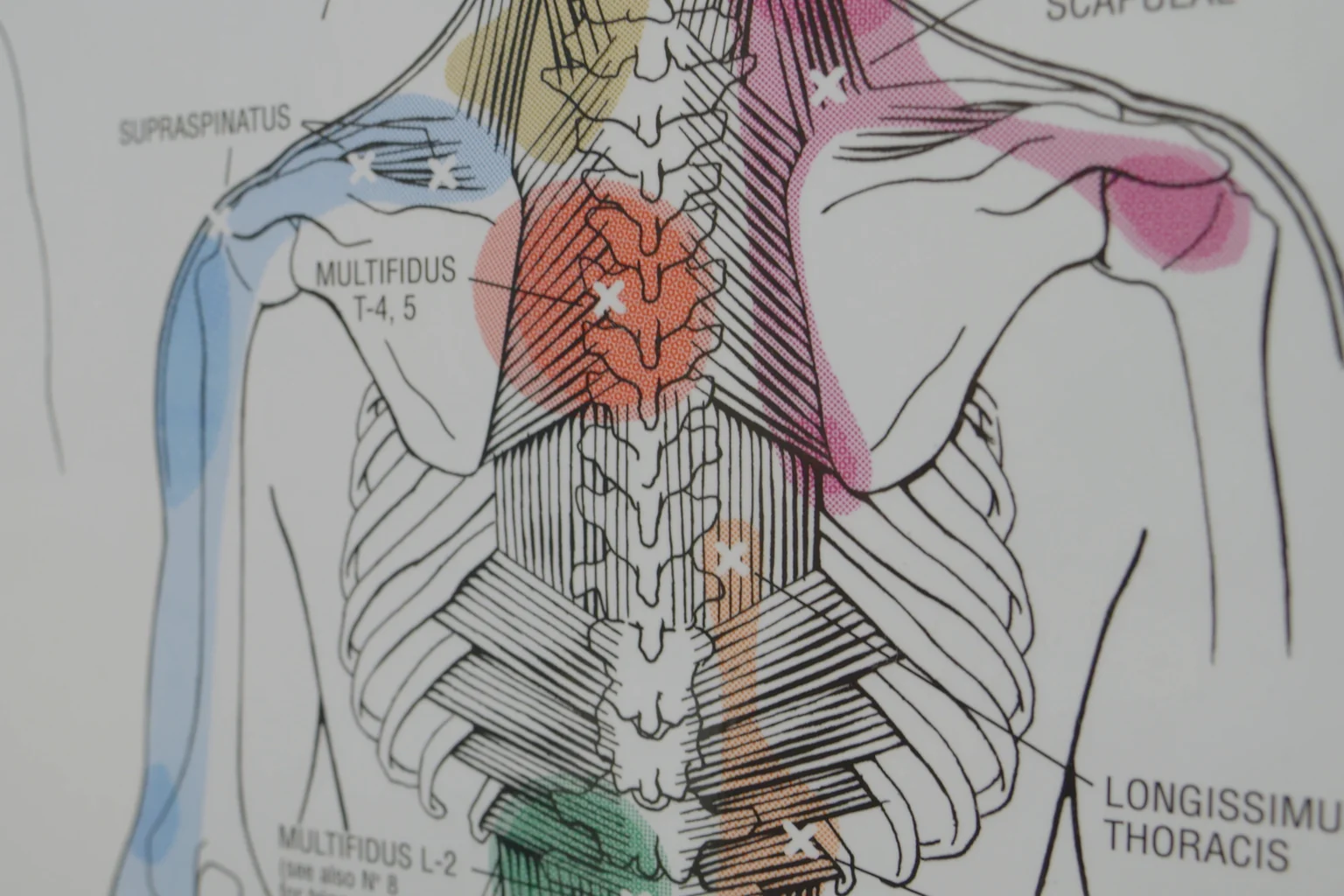
A small amount of local anesthetic, often lidocaine mixed with saline, placed into a tight knot in the neck or shoulder.
Neck, shoulder and posture exercises coached in the clinic, with a short home routine.
What to expect
Headache patterns change over weeks, so the plan moves in steps.
We talk through your headache pattern and triggers and examine your neck and posture.
The treatments in your plan, plus small changes to sleep, screen time and meals.
Coached neck and shoulder exercises, kept up at home between visits.
Your diary shows which triggers matter most for you, and your plan adjusts around them.
How often headaches come, and how they respond, varies widely from person to person.
Can it wait?
Do not wait
Go to urgent care or an emergency room, or call 911.
While it settles
Call 911 or go to the nearest emergency room for a sudden, explosive headache. Seek medical help right away for the other signs.
Cost and payment
Prices are not posted online.
Your cost depends on the treatments in your plan and how many visits it includes, such as adjustments, injections and rehab.
In patients' own words
I came to Advanced Pain Solutions with daily migraines. After a few weeks of treatment, I actually had 3 straight days without a headache! This hasn't happened in over a year!! Many thanks to Dr. Kent and all the staff who are kind, supportive, and welcoming.
...APS took x-rays and set me up with a personalized care plan for ten weeks....
A patient's story
Individual results vary.
See all reviews on Google

Who you will see
Chiropractic BioPhysics posture work is planned by our Doctors of Chiropractic. Trigger point injections are given by our nurse practitioner or another medical provider, and medical assistants coach the neck exercises.
Dr. Kent Rookstool, DC, Doctor of Chiropractic and founder · Dr. Kevin Lewis, DC, Doctor of Chiropractic
Book a visit with our teamGetting here
From downtown Bend, the clinic is about 24 minutes (16.6 miles) north on Highway 97.
1020 SW Indian Ave Ste 100, Redmond, OR 97756 · (541) 923-6024
Mon to Thu 9 AM to 6 PM
Your first visit
Share a brief note about where it hurts, what sets it off and how long it has been going on. We will evaluate your symptoms, discuss your goals, and explain which options may fit.
Call (541) 923-6024. Mornings or afternoons, Monday to Thursday.
We look at how your pain behaves, what movements trigger it, and what tissues may be involved.
We walk you through what we find in plain language and outline next steps that match your goals.
Yes. Holding your head and neck in an awkward position is linked to tension headaches, which often start at the back of the head with tight shoulder, neck or jaw muscles. A head injury can also bring on tension headaches. Your exam checks how your neck moves and how you hold your head at work and at rest.
A tension headache is usually a dull, squeezing pain on both sides of the head. A migraine is more often throbbing, on one side, and it can come with nausea, vision changes or sensitivity to light and sound. Moving around tends to make a migraine worse.
Rest in a quiet, dark room, put a cool cloth or ice pack on your forehead, and drink plenty of fluids, especially if you are vomiting. Small amounts of caffeine early in an episode may help some people.
Chronic migraine means headaches from migraine on at least 15 days a month for more than three months. People who have migraine episodes once a week or more are usually prescribed treatment to prevent them, so talk with your doctor if your headaches have reached that point.
Yes. Write down when each headache starts, how long it lasts, what you ate, how you slept and what you were doing. Those notes help you and your providers spot patterns and build a plan around your triggers.
It can. Rebound headaches often come from overusing pain medicine for migraine or tension headaches, which is why they are also called medicine overuse headaches. Taking pain medicine more than 3 days a week on a regular basis can bring them on, so tell your provider how often you take it.
Advanced Pain Solutions
A neck, posture and trigger review at your first visit.
Mon to Thu 9 AM to 6 PM · 1020 SW Indian Ave Ste 100, Redmond