

01 · Regenerative first
Regenerative medicine
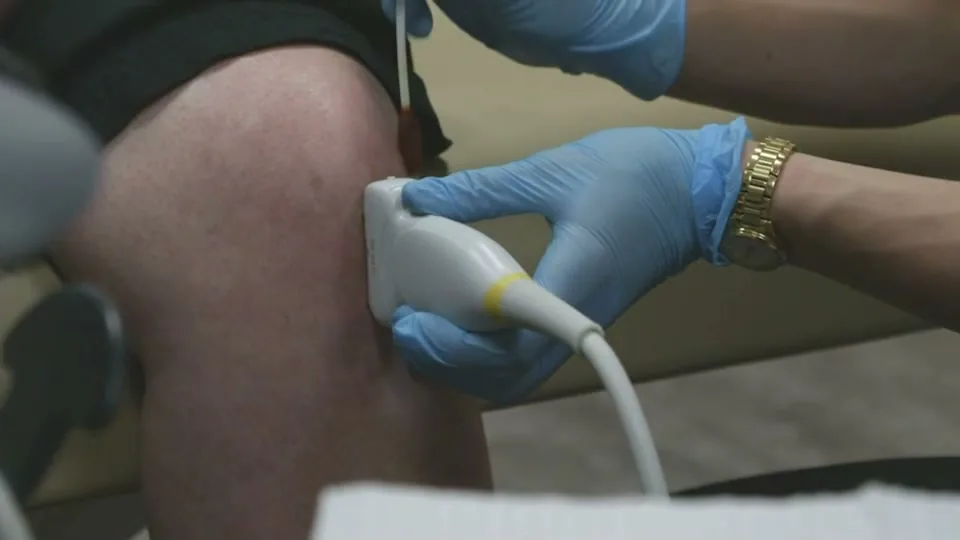
When your exam supports it, regenerative therapies may be part of an arthritis plan, given by our nurse practitioner.
About regenerative medicine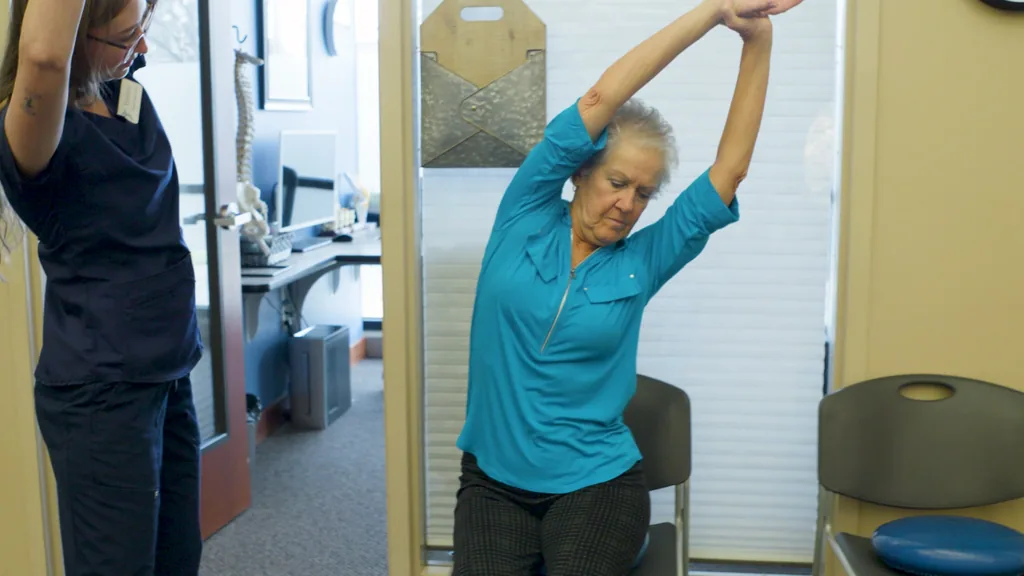
Keep your knees and hips in the game.
Stiff knees in the morning, a hip that aches after a walk, a joint that swells after a busy day. We explain what your exam shows and which options fit.
The short answer
Osteoarthritis, the most common type of arthritis, happens when cartilage and other tissue in a joint break down over time. It brings pain with use, stiffness after rest and sometimes swelling, most often in the knees, hips, hands, neck and low back. At our clinic in Redmond, arthritis care is planned after an exam.
Arthritis usually arrives slowly. A knee that needs a minute on the stairs, a hip that tightens on the drive home, a game you cut short because the joint swelled the last time.
Your exam decides whether regenerative care for arthritis belongs in your plan. Guided exercise and the clinic's joint rejuvenation protocol are other options your provider can explain.
What is going on
Arthritis is a group of joint conditions. The most common is osteoarthritis, in which cartilage and the tissue around it break down gradually, bringing pain with activity and a short spell of stiffness after rest.
Cartilage and other joint tissue change and begin to break down.
It loses some of its smooth movement and can swell after use.
Pain and stiffness make you move less, and the muscles that support the joint weaken.
Your provider may use digital X-rays to see the joint and goes over them with you.
Guided rehab begins with a functional evaluation, so your provider can compare how you move as the plan goes on.
Is this what you feel?
Arthritis often starts in one or two joints and builds slowly.
Your list
of 8
Bring your list to the evaluation; it helps us start in the right place.
Book an evaluation
Where it hurts: the joints
Why it happens
Several things make osteoarthritis more likely, and some of them you can change.
Cartilage and other tissue in the joint change in structure and break down, usually gradually over many years. Once that process starts, the joint can stiffen and lose some of its range.
A torn ligament, a fracture or surgery on a joint years ago raises the chance of arthritis in that same joint later. Younger people who get osteoarthritis often trace it to an injury.
Being overweight adds load to the knees and hips with every step. Losing weight can reduce pain, protect the joint from further injury and make it easier to move.
Repeating the same joint movement over many years, at work or in a sport, is a known risk factor. Golf, pickleball and long hikes all repeat the same motions through the knees and hips.
Arthritis can run in families, and joints that did not form correctly are more likely to develop it. Tell your provider about any family history at your first visit.
How we treat it
Arthritis care at our clinic follows an exam of the joint and how you move. A plan can combine guided exercise, regenerative care such as PRP and the joint rejuvenation protocol.
01 · Regenerative first
When your exam supports it, regenerative therapies may be part of an arthritis plan, given by our nurse practitioner.
About regenerative medicinePlatelet-rich plasma is prepared from your own blood in our centrifuge, then injected where your plan calls for it.
A sequenced, non-surgical combination of regenerative injections, focused shockwave and retraining exercises in one plan.
Range-of-motion and strengthening work for the muscles that support an arthritic knee or hip.
Regenerative therapies are not a cure and results vary. Some biologic products discussed here are not FDA approved for this use. Your provider will review options, risks and costs with you.
What to expect
Arthritis is long term, so the aim is a plan you can keep up.
A joint exam, a look at how you move, and X-rays when they help your provider see the joint.
Settle the flare and start the exercises and treatments your plan includes.
Coached sessions in the clinic, with exercises to do at home on the days between.
Regular low-impact activity and the home program become part of your week.
How your joint responds depends on how far the arthritis has gone, your general health and how steadily you keep moving.
Can it wait?
Do not wait
Go to urgent care or an emergency room, or call 911.
While it settles
See a medical provider promptly for any of these. Joint pain that lasts more than several days is also worth an exam.
Cost and payment
Prices are not posted online.
What you pay depends on the treatments your plan combines and how many visits it takes.
How patients rate the clinic


Who you will see
The clinic's founding chiropractor leads arthritis care here, with injections given by our nurse practitioner. Joint injections are guided by ultrasound. Medical assistants coach the exercises that keep a stiff joint moving.
Dr. Kent Rookstool, DC, Doctor of Chiropractic and founder · Summerlyn Ellis, FNP-C, Family Nurse Practitioner
Book a visit with our teamGetting here
Terrebonne is about 11 minutes from the clinic, and Crooked River Ranch about 28 minutes.
1020 SW Indian Ave Ste 100, Redmond, OR 97756 · (541) 923-6024
Mon to Thu 9 AM to 6 PM
Your first visit
Share a brief note about where it hurts, what sets it off and how long it has been going on. We will evaluate your symptoms, discuss your goals, and explain which options may fit.
Call (541) 923-6024. Mornings or afternoons, Monday to Thursday.
We look at how your pain behaves, what movements trigger it, and what tissues may be involved.
We walk you through what we find in plain language and outline next steps that match your goals.
When joint damage is extensive and other treatments are not helping, the National Institutes of Health lists surgery, including partial or total knee replacement, as an option. We perform no surgery, so a replacement would be done by an orthopedic surgeon.
Your evaluation shows what a non-surgical plan can include for your knee.
The CDC names five self-care steps for arthritis. Three of them are about your body: be active, keep a healthy weight and protect your joints from injury. The CDC's activity target is 150 minutes a week, which can be broken into 30 minutes a day, 5 days a week. Walking, cycling and swimming are easier on sore joints.
There is no single one, though inactivity and extra body weight both work against your joints. Moving less lets the muscles that support a joint weaken, and extra weight adds load to your knees and hips with every step. Both can change, and regular low-impact activity helps with each.
A brace fitted by a health care professional can help steady a knee with osteoarthritis, and shoe inserts can lower the pressure on a sore joint when you stand or walk. We fit knee braces in the clinic, including unloader-style braces for knee arthritis and custom knee bracing, when your exam shows a brace makes sense for you.
Each has its use. Heat increases blood flow, flexibility and your tolerance for pain, which suits a stiff joint first thing in the morning. Cold numbs the nerves around the joint and may relieve inflammation, which suits a joint that is sore and swollen after a busy day.
Advanced Pain Solutions
One visit to see where your knees and hips stand.
Mon to Thu 9 AM to 6 PM · 1020 SW Indian Ave Ste 100, Redmond