

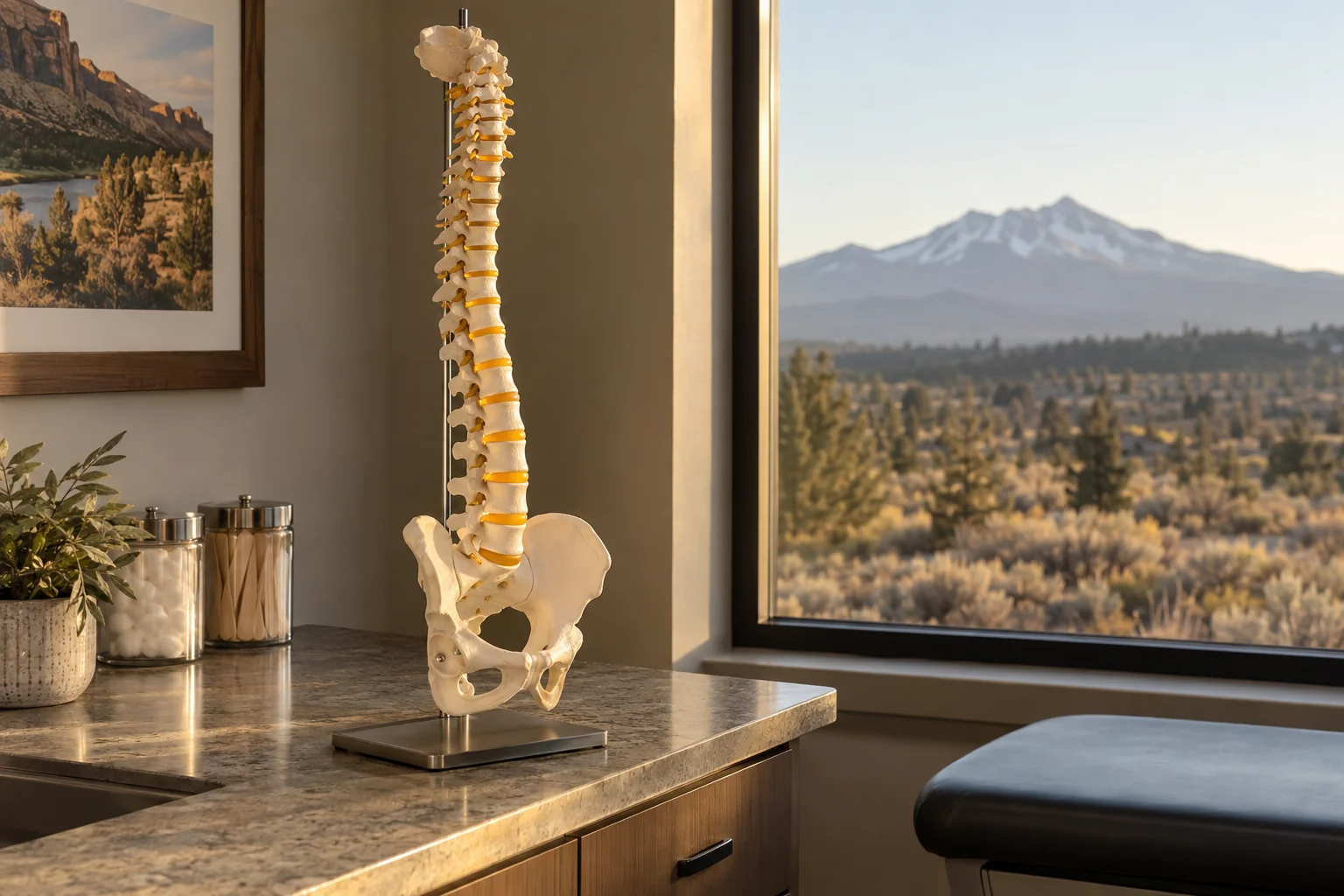
Disc pressure can feel deep and stubborn. Depending on which disc is irritated, it may show up in the lower back, neck, hip, leg, shoulder or arm.
Why does disc pressure hurt?
Discs sit between the bones of the spine and cushion them. Each one has a tough outer layer and a soft, jelly-like center. When a disc ruptures and that center leaks, it can irritate the nearby nerves.
That is one reason symptoms may not stay in one place. A disc problem in the lower back can send pain into the hip or leg. A problem in the neck can reach the shoulder, arm or hand.
Adult discs have almost no blood vessels of their own, and a review of disc nutrition describes disc cells relying on diffusion from vessels at the disc's edges.
The muscles around a sore disc often tighten to protect it. That guarding can make a workday at a desk, a long drive on Highway 97 or bending to pick something up feel harder.
How does spinal decompression work?
The treatment uses a computerized table that applies a precise, gradual stretch to the spine. The table works in cycles and can focus on a specific spinal level.
Gentle tension, then release. The treatment is gradual, so the session is meant to feel gentle.
Decompression gently separates the targeted part of the spine. The aim is to reduce pressure on the disc and on the nerve roots beside it.
After an exam, it is often part of the plan for a herniated disc or sciatica. It may also be considered for a bulging disc or for nerve pain that travels into an arm or leg.
Who may be a candidate?
Decompression may be considered when symptoms are tied to pressure on a disc or a nerve. Sciatica is a symptom of a problem with the sciatic nerve, the largest nerve in the body.
It is not the right fit for every spine. Your provider reviews your history, your symptoms and your exam first. Care often includes X-rays that your provider goes over with you.
What happens at a visit?
The first conversation covers your history and your daily routine. Your provider asks when the pain began, what sets it off, and whether it travels into an arm, hip or leg.
If decompression fits your case, your provider explains how the table works and what you may feel. Your provider also explains how long each session runs.
Decompression is usually paired with chiropractic care and rehabilitation. At our clinic, chiropractic care, decompression, rehab and injections happen under one roof, and the team shares your plan.
Getting to the clinic from around Central Oregon
Our clinic is in Redmond, and it is the only Advanced Pain Solutions location. From downtown Bend it is about 24 minutes (16.6 miles) north on Highway 97. From downtown Sisters it is about 30 minutes (19.6 miles), almost all on Highway 126.
A clearer view of disc pressure
If disc pressure may be part of your pain, read how we approach spinal decompression therapy at our clinic.
Ready to take the next step?
Talk with the Advanced Pain Solutions team about a spinal decompression plan built around your goals.