

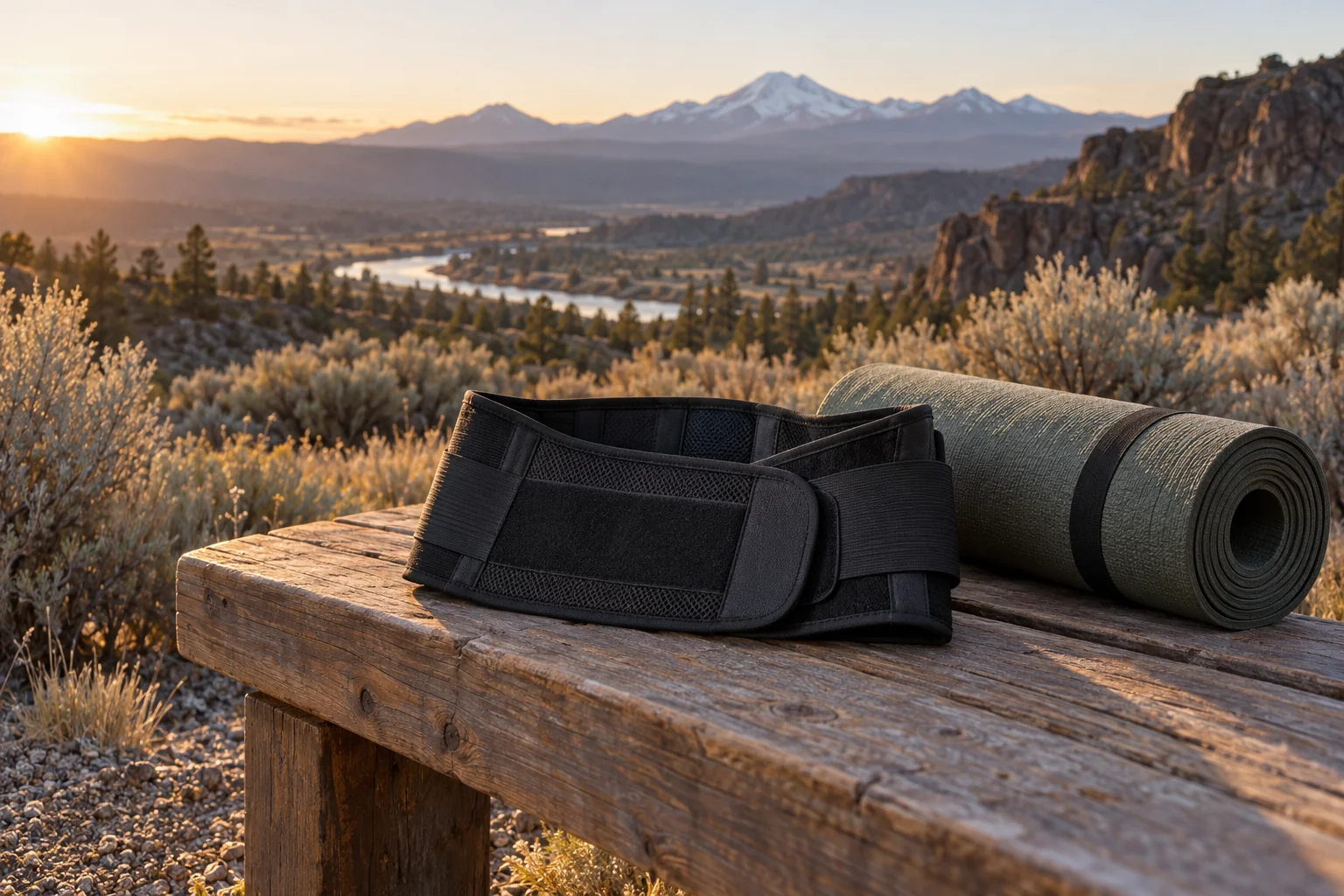
A common worry about back braces is that they will make your core weaker. A brace can look like a cast, and the risks proposed for long-term bracing include muscle weakness, muscle loss and dependence on the brace.
Where does the fear come from?
Most lumbar braces still let you walk, sit and bend to a degree. That is very different from a limb held still in a cast for weeks.
In a 2024 review of back bracing, the authors describe the fear of weakness, deconditioning or joint stiffness as unfounded. They cite a survey in Alberta, Canada, where about half of the clinicians asked believed that non-rigid back braces cause muscle loss.
What does the research say about bracing and muscle strength?
The same review cites research finding that continuous use of a lumbar brace did not lead to muscle weakness, loss of muscle, or reduced motor performance and function. The review looked at lumbar back braces, so its findings do not automatically carry over to knee braces or other joints.
Some questions about bracing remain open. A Cochrane review summary rated the overall evidence on lumbar supports for chronic low back pain as very low quality, too weak to recommend for or against them.
Put together, the evidence leans against the weakness concern, while bracing as a whole still needs more study.
Does it matter how long or how often you wear it?
Yes. Wearing a brace for flare-ups, heavy lifting or long stretches of standing is a different pattern from wearing it all day with no plan to take it off.
That is why a provider asks about your routine and names the situations where the brace is worth wearing.
Is there a real downside to long-term use?
The more practical risk is relying on the brace and skipping the work that strengthens your back. MedlinePlus advice on caring for your back notes that strengthening your abdominal muscles can ease the stress on your back.
A brace is meant to reduce strain during specific moments while you keep building that strength.
How do you use a brace without depending on it?
Wear it for the activities or flare-ups that call for extra support. Keep up your strengthening work the rest of the week.
At our clinic, rehab is sports injury and guided musculoskeletal rehabilitation, delivered by our medical assistants. It begins with a functional evaluation to set a baseline, then moves to coached exercises in the clinic and exercises to do at home. Our clinic also fits back braces.
Bracing is one part of a plan that may also include chiropractic care or spinal decompression, depending on what the exam finds.
Moving forward with a brace
If worry about your core has kept you from trying a brace, the research suggests it should not be the deciding factor for typical short to medium use. Read about bracing and guided rehab at our sports medicine clinic.
Ready to take the next step?
Talk with the Advanced Pain Solutions team about a sports medicine clinic plan built around your goals.